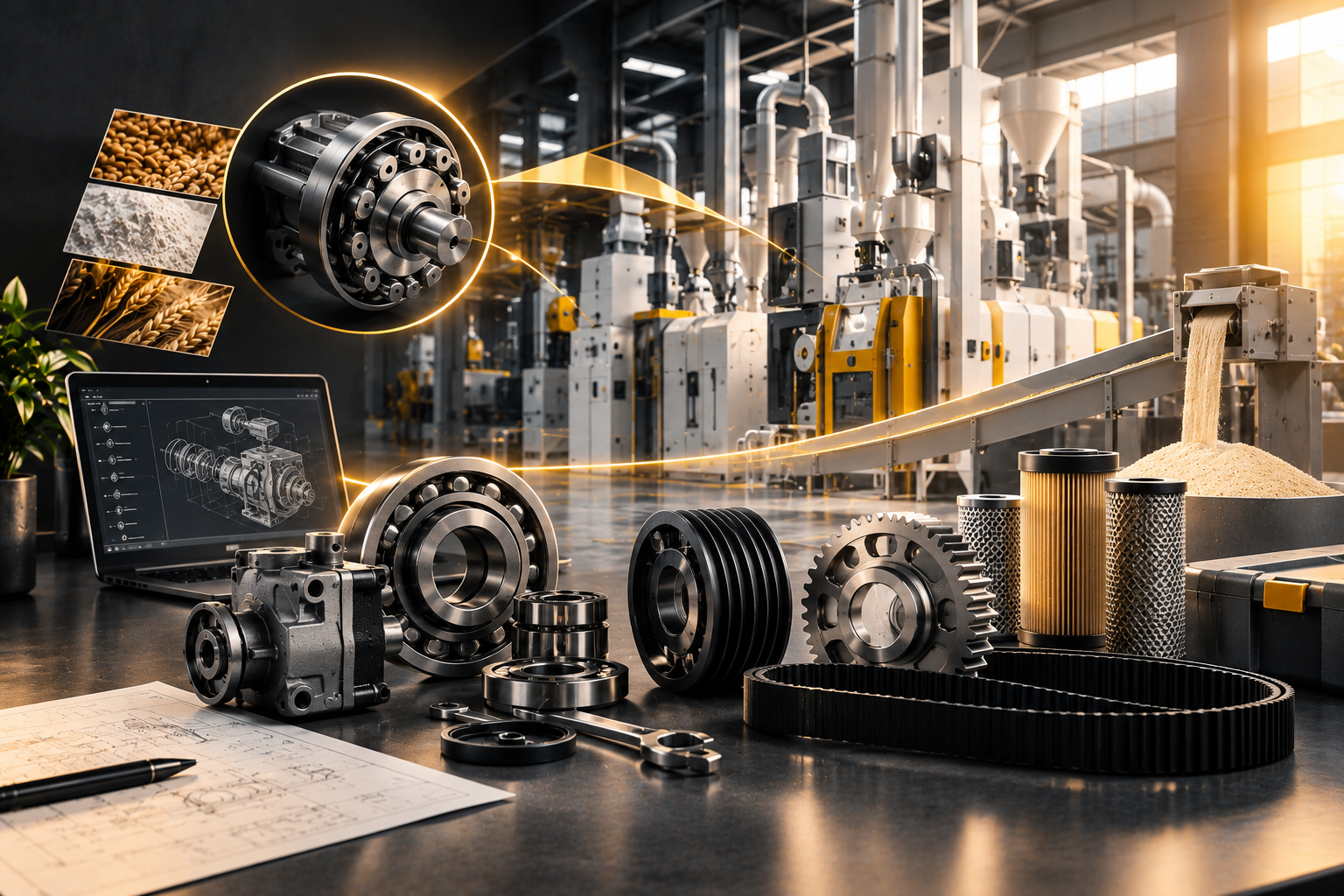
Flour milling machinery plays a critical role in flour production, grain processing, and various industrial applications. To ensure that these machines operate efficiently and reliably, using high-quality flour mill spare parts is essential. Choosing the right spare parts helps reduce unexpected downtime, maintain machine performance, and control operating costs.
In milling facilities, machinery operates under demanding conditions. Over time, components may wear out or lose their performance. Regular maintenance and timely replacement of worn parts help prevent unexpected breakdowns and maintain production continuity.
The main benefits of quality flour mill spare parts include:
Production continuity: Helps minimize unplanned downtime and production losses.
Machine performance: Supports reliable operation under the intended working conditions.
Extended service life: Durable materials and manufacturing quality can improve component longevity.
Maintenance cost control: Proper part selection helps reduce recurring failures and unnecessary replacements.
Operational safety: Compatible components help maintain safe operating conditions.
Spare parts used in milling facilities vary depending on the machinery and production line. Identifying the correct component is essential for effective maintenance and equipment compatibility.
Components exposed to friction and mechanical loads may gradually wear out during continuous operation. Regular inspections help identify wear early and prevent performance issues.
Screening and separation equipment plays an important role in grain processing and flour production. The suitability and condition of these components can affect production efficiency and final product quality.
Mechanical components responsible for transmitting motion must be selected according to the machine's specifications. Incompatible parts may cause vibration, reduced performance, or additional maintenance requirements.
Flour milling machinery contains a wide range of components with different functions. Machine models, technical specifications, dimensions, and manufacturer information should be considered when identifying the correct replacement part.
Selecting spare parts based solely on price may lead to additional costs in the long term. Technical compatibility, durability, and expected service life should also be considered.
Important factors include:
Machine compatibility: Ensure that the component is suitable for the specific machine and model.
Material quality: Evaluate material properties and durability according to operating conditions.
Technical dimensions: Check measurements, connection points, and operating tolerances.
Supply lead times: Reliable delivery helps maintain production schedules.
Technical support: A knowledgeable supplier can assist with part identification and compatibility.
Considering these factors helps businesses make informed purchasing decisions and manage maintenance more effectively.
When purchasing flour mill spare parts, businesses may consider original manufacturer parts or technically compatible alternatives. The key requirement is that the selected component meets the machinery's specifications and operational requirements.
Using an unsuitable part may lead to installation problems, premature wear, or reduced machine performance. Technical documentation and professional advice can help ensure the correct choice.
Spare parts should be evaluated not only by their initial purchase price but also by maintenance frequency, equipment uptime, and overall operating costs.
Scheduled maintenance helps identify potential problems before they cause serious equipment failures. Routine inspections should include checks for wear, unusual noises, excessive vibration, and changes in machine performance.
A planned maintenance program allows businesses to anticipate spare part requirements, organize procurement more effectively, and reduce unplanned production interruptions.
Following the manufacturer's maintenance recommendations and adapting inspection intervals to operating conditions can help maintain long-term equipment performance.
Reliable access to suitable spare parts is essential for effective maintenance and repair operations. When selecting a supplier, businesses should consider product availability, technical knowledge, compatibility, and delivery times.
Providing machine details and the technical specifications of the existing component can make it easier to identify the correct replacement part.
Efficient milling operations depend on suitable spare parts and regular maintenance. Using durable, compatible components helps reduce unplanned downtime, improve maintenance processes, and support production continuity.
When sourcing flour mill spare parts, always consider your machine's technical specifications, verify component compatibility, and evaluate suppliers that meet your operational requirements.